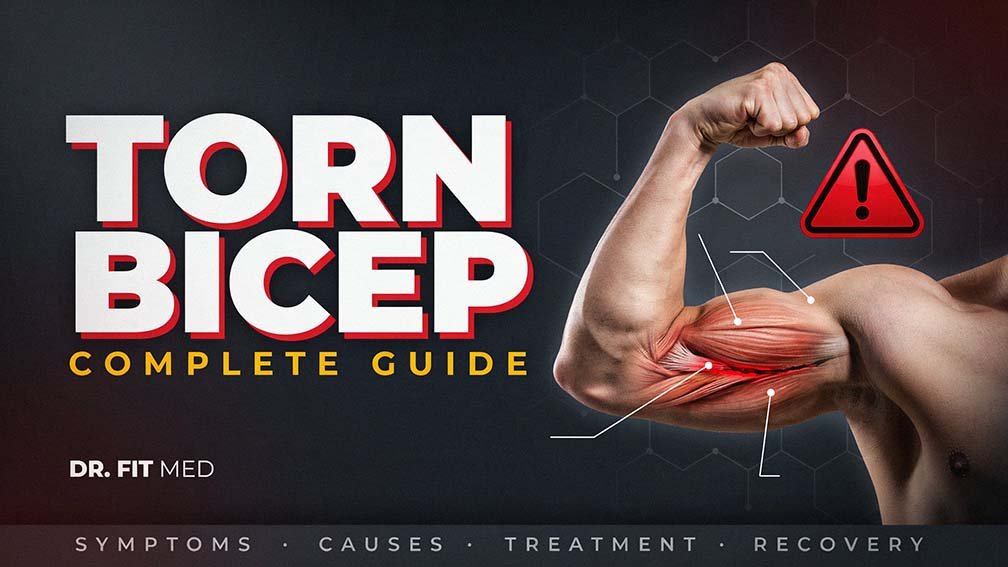
Your bicep just gave out mid-lift, and something felt wrong. Maybe you heard a pop. Maybe you saw a lump form near your elbow. Either way, you’re here because you need answers, not medical jargon.
A torn bicep is one of those injuries that catches people off guard. One second you’re pushing through a heavy set or diving for a ball, and the next you’re staring at an arm that doesn’t look or move the way it should. This guide breaks down everything you need to know — from spotting the injury to understanding treatment options and getting back to the gym safely.
What Is a Torn Bicep?
The biceps muscle runs along the front of your upper arm and connects to your shoulder and elbow through tendons. A torn bicep happens when either the muscle itself or one of these connecting tendons tears, partially or completely.
There are two main types:
- Proximal bicep tear – happens near the shoulder, often less noticeable
- Distal bicep tendon tear – happens near the elbow, usually more painful and disabling
Most gym-related tears occur at the elbow, especially during heavy pulling or lifting movements where the arm is forced straight against resistance.
What Does a Torn Bicep Feel Like?
This is one of the most common questions people ask right after it happens, and for good reason — the injury feels dramatic.
Most people describe it as:
- A sudden, sharp pop or snap in the arm
- Immediate, intense pain near the elbow or shoulder
- A feeling like the muscle “let go” all at once
- Weakness that shows up instantly, especially when turning the palm upward or bending the elbow
Some people say it felt like someone hit them in the arm with a bat. Others barely notice pain at first, only realizing something’s wrong when they try to lift something and their arm won’t cooperate.
Torn Bicep Symptoms to Watch For
Recognizing the symptoms early can make a real difference in how quickly you get proper treatment. Common torn bicep symptoms include:
Visible and Physical Signs
- A bulge or lump in the upper arm (often called a “Popeye deformity”)
- Bruising that spreads down the arm within a day or two
- Swelling near the elbow crease
- Visible gap or indentation where the tendon used to be
Functional Signs
- Weakness when bending the elbow
- Difficulty rotating the forearm (turning a doorknob, using a screwdriver)
- Pain that worsens with movement
- A feeling of instability when lifting even light objects
If you notice several of these symptoms together, especially the bulge and sudden weakness, it’s a strong indicator of a bicep tendon tear rather than a simple strain.
What Caues a Torn Bicep Muscle?
Understanding the cause helps you avoid repeating the injury later. Here are the most frequent culprits:
Heavy Lifting
This is the leading cause among gym-goers. Exercises like barbell curls, heavy rows, or deadlifts put enormous stress on the bicep tendon, especially when form breaks down or weight is too aggressive for your current strength level.
Sudden Force or Impact
A quick, unexpected load on the arm — like catching a falling object, breaking a fall, or an awkward tackle in sports — can tear the tendon instantly.
Age-Related Wear
Tendons naturally lose elasticity over time. Most distal bicep tears happen in men between 35 and 55, often during otherwise normal activity, because years of micro-stress have already weakened the tendon.
Sports Injuries
Contact sports, wrestling, football, and even rock climbing carry a higher risk due to sudden pulling forces or falls onto an outstretched arm.
Steroid Use
Anabolic steroids can increase muscle strength faster than tendon strength can adapt, creating a mismatch that raises tear risk significantly.
Bicep Tendon Tear: Partial vs Complete
Not all tears are the same, and the severity changes your treatment path.
Partial tear — Some fibers remain intact. You may still have some strength and movement, though weakened and painful.
Complete tear — The tendon completely separates from its attachment to the bone. This usually causes the classic “Popeye” bulge and significant strength loss, particularly in forearm rotation.
A complete tear rarely heals on its own and typically requires surgical repair to restore full function, especially in active or physically demanding individuals.
Torn Bicep Treatment Options
Treatment depends on the tear’s location, severity, and your activity level. Here’s a closer look at the primary treatment approaches available.
Non-Surgical Treatment
This route works best for partial tears, proximal tears, or older adults with lower physical demands. It typically includes:
- Rest – avoiding activities that stress the arm
- Ice therapy – reducing swelling in the first 48–72 hours
- Pain management – over-the-counter anti-inflammatories as advised by a doctor
- Physical therapy – rebuilding strength gradually once pain subsides
- Bracing – limiting motion during early healing
Non-surgical treatment can leave some permanent weakness, particularly in supination (palm-up rotation), but many people return to normal daily function.
Surgical Treatment
Surgery is often recommended for:
- Complete distal bicep tears
- Younger, physically active patients
- Athletes or manual laborers who need full strength restored
The procedure reattaches the tendon to the bone using anchors or sutures. Recovery is a process, not an event — full strength typically returns over four to six months, with early motion exercises starting within the first few weeks under a surgeon’s guidance.
Recovery Timeline (General Overview)
| Phase | Timeframe | Focus |
|---|---|---|
| Immobilization | Weeks 0–2 | Rest, swelling control |
| Early motion | Weeks 2–6 | Gentle range of motion |
| Strengthening | Weeks 6–12 | Light resistance training |
| Full activity | Months 4–6 | Return to sport or heavy lifting |
This timeline varies by individual, tear severity, and whether surgery was performed. Always follow your physical therapist’s specific guidance rather than a generic schedule.
Can You Exercise Safely With a Torn Biceps Tendon?
Short answer: it depends on the severity, but pushing through it is rarely a good idea.
With a partial tear, some doctors allow modified training — lower body work, core exercises, or light upper body movements that don’t stress the bicep. But continuing to load the injured tendon can turn a partial tear into a complete one.
With a complete tear, working the affected arm is generally off-limits until cleared by a medical professional. However, you can usually:
- Train your legs and core
- Do light cardio (walking, stationary bike)
- Work the uninjured arm, within reason
- Focus on mobility work that doesn’t involve the injured tendon
The temptation to “push through” a bicep injury is common, especially among serious lifters, but doing so risks turning a fixable injury into a much bigger surgical case. Patience here genuinely pays off.
How Is a Torn Bicep Diagnosed?
A doctor typically starts with a physical exam, checking for the visible bulge, tenderness, and strength differences between arms. From there, imaging confirms the diagnosis:
- MRI – the gold standard for confirming tear location and severity
- Ultrasound – faster and sometimes used for quick assessment
- X-ray – rules out bone involvement, though it won’t show soft tissue damage directly
Getting an accurate diagnosis matters because treatment decisions hinge on whether the tear is partial or complete, and where exactly it occurred.
Preventing Future Bicep Tears
Once you’ve experienced a torn bicep, prevention becomes a priority. A few practical habits help:
- Warm up properly before heavy pulling or curling movements
- Avoid ego lifting — increase weight gradually
- Strengthen tendons with controlled eccentric exercises
- Use proper form, especially on rows, curls, and pull-ups
- Address any early elbow or bicep discomfort before it worsens
- Stay consistent with mobility work for the shoulder and elbow
Tendons adapt more slowly than muscles. Giving them time to catch up to your strength gains is one of the smartest long-term investments you can make in your training.
Frequently Asked Questions
1. How do I know if I tore my bicep or just strained it?
A strain usually causes soreness without a visible bulge or sudden pop. A tear typically involves a sharp pain, an audible pop, and often a noticeable deformity in the upper arm.
2. Can a torn bicep heal without surgery?
Yes, particularly for partial tears or proximal tears. Complete distal tears usually need surgery to restore full strength and function.
3. What does a torn bicep feel like compared to a pulled muscle?
A torn bicep feels sudden and dramatic — often described as a pop followed by sharp pain and weakness. A pulled muscle tends to build gradually and feels more like tightness or soreness.
4. How long does it take to recover from a torn bicep?
Non-surgical recovery can take 6–12 weeks for basic function. Surgical recovery generally takes 4–6 months for full strength, depending on the individual and rehab compliance.
5. Can I still workout with a torn bicep tendon?
You can often train unaffected muscle groups, but exercises involving the injured arm should be avoided until cleared by a medical professional to prevent worsening the tear.
6. What happens if a torn bicep goes untreated?
Untreated tears can lead to permanent weakness, reduced range of motion, and in some cases, the tendon retracting further, making later surgical repair more complicated.
7. Is surgery always necessary for a bicep tendon tear?
No. Surgery is generally reserved for complete tears or cases where full strength is essential, such as for athletes or manual laborers. Many partial biceps tears can improve significantly with nonsurgical, conservative care.
Final Thoughts
A torn bicep can feel alarming in the moment, but understanding what’s happening in your arm makes the recovery process far less overwhelming. Whether it’s a partial strain from heavy lifting or a complete tendon tear from sudden force, getting an accurate diagnosis early is the single most important step you can take.
Listen to your body, don’t rush back into heavy training, and work closely with a medical professional to choose the right treatment path. With the right approach, most people return to full strength and get back to doing what they love — just with a smarter, more tendon-friendly training routine going forward.