Maybe you’ve seen those circles on the back of an athlete, or a buddy has raved about their session, and you’re typing “cupping therapy near me” into your search bar. Good instincts. “It is very important to choose a skilled practitioner who is able to give a clear, realistic overview of what cupping therapy can and cannot do, and who adheres to high standards of sanitation.”
In this tutorial we’ll look at what cupping is, who does it, how to choose a practitioner, what you can expect in the room and where the evidence is
What Is Cupping Therapy?
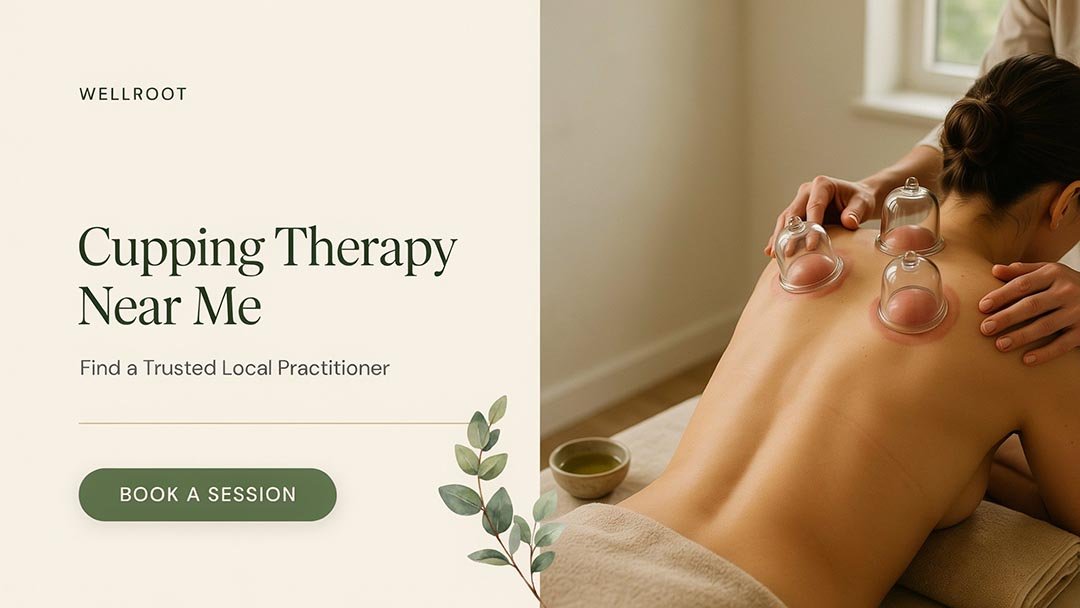
Cupping therapy is a manual therapy that use cups to draw on the skin. The suction pulls the skin and the tissue just beneath it up into the cup. A session usually lasts 10 to 20 minutes and the cups tend to leave circular, transient marks.
It is an ancient practice. Versions are found in Chinese, Middle Eastern, Greek, and Egyptian medical traditions. Today acupuncturists, massage therapists, physical therapists and traditional healers offer it. Some are built on classical theory, some use it only as a soft-tissue approach.
Suction Cups Therapy: How Do The Cups Work
“Cupping is also known as “suction cup therapy,” a name that reflects the use of cups to create controlled suction against the skin. You can get cups made of glass, silicone, plastic or bamboo. The practitioner can make the hoover in one of three ways:
Fire cupping (heat) A flame warms the air in a glass cup for a moment. And when the air gets frigid, it sucks. The flame never touches your skin.
Manual pump: A small hand pump draws air from a plastic cup.
Silicone squeeze The practitioner squeezes a flexible cup, puts it, releases it
The suction raises the skin and may improve local blood flow. Many describe the feeling as the antithesis of a deep-tissue massage: instead of pressing, it’s pulling.
Types of Cupping You May Find Locally
As you browse listings, you will see a few distinct phrases.
Dry Cupping
Cups are set and held in place, or moved. No skin cutting is involved. This is the most frequent form and the sort most clinics offer.
Cupping (Massage) Cups
Next, the practitioner adds oil and then slips a cup over the skin. It is often used on larger muscle groups like the back and thighs.
Wet Cupping (Hijama)
Wet cupping, known as hijama in various countries, involves making a small cut in the skin after the first suction, and then putting the cup back on to remove a little quantity of blood. Hijama is rooted in Islamic and Middle Eastern traditions and many people seek it for religious or cultural reasons.
Wet cupping is more dangerous than dry cupping because it involves broken skin and blood. If you are seeking for hijama therapy near me then the screening stage below is even more critical.
Who Does Cupping Therapy?
A frequent inquiry is who provides cupping therapy professionally. Cupping therapy may be offered by practitioners with different types of professional training and backgrounds:
- Cupping is often used with acupuncture by licensed acupuncturists or traditional Chinese medicine practitioners.
licensed massage therapists using it as a soft tissue method
Physical therapists and some chiropractors (where permitted by training and state regulations)
Hijama practitioners, usually operating in traditional or faith-based contexts, and frequently with specialised training in technique and cleanliness
Athletic trainers, primarily in sports
Rules vary by state and country. There is no national licensing for cupping in the United States. Legal status of it, especially wet cupping, depends on the person’s professional licence and local regulation. Always enquire what credentials they have and what board issues it.
How to Find Cupping Therapy Near You
No particular directory is needed. You’ll have a good shortlist in no time with a few actions.
- Search by credential, not only by therapy. You can also refine your local search by using phrases such as “licensed acupuncturist near me” or “massage therapist offering cupping,” along with the name of your city.
Check with your state licensing board. Most boards will allow you to verify a licence and any disciplinary history online.
Read reviews for designs. Check comments regarding cleanliness, communication and if the practitioner explained things correctly.
Book now Call Ask how they are trained in cupping, how often they do it, and what they do for sterilisation.
Ask people you know. A doctor, friend or physical therapist may know a good person.
Cupping Therapy Charlotte, NC
If you are seeking for cupping therapy in Charlotte NC, you will find it offered at acupuncture clinics, integrative health practices, massage studios and some sports focused rehab clinics. North Carolina acupuncturists are licensed by the state acupuncture licensing board. The state massage and bodywork board licenses massage therapists. Before you book you can check any licensing on the boards’ websites.
One local tip to remember is that places with a lot of sports and wellness traffic will frequently have more cupping providers, but a convenient location shouldn’t outweigh an approved licence and a hygienic treatment room.
Red Flags and Green Flags
Good things
- Valid licence or recorded training
A brief health intake before to treatment
Good description of dangers and aftercare.
Single-use or appropriately disinfected equipment
Plain talk about what results you can expect
Warnings
- Treatment of severe disorders
Pressure to buy extended treatment packages up-front
Re-using cups without any evident washing between customers
No intake questions (even for wet cupping)
Advice to discontinue prescribed medicine
What to Expect During Your First Session
Knowing the routine takes most of the nerves away.
- Intake. You will review your symptoms, medical history, medicines, and any problems with bleeding or skin.
Placement. (2) You lie face down or sit with the area to be treated exposed. Common areas are the back, shoulders, neck and legs.
Cup Placement The cups are left on for approximately 5 to 15 minutes, or they are moved over oiled skin.
Deletion . The practitioner relieves the suction, removes the cups.
Post care. You should expect to be advised on fluids, avoiding sun on the region and rest.
You will sense tightness or pulling. It shouldn’t be sharp or scorching. If it does, tell the practitioner straight away.
What Do the Marks Mean?
Red or purple round marks are typical and normally vanish in a few days to roughly two weeks. They are caused by blood vessels at the surface of the skin reacting to suction. They usually don’t hurt, but the area can be tender.
Potential Benefits of Cupping for Therapy
People use cupping for therapeutic purposes in a few basic ways: to release muscular tension, to relax after intense training, and to help with chronic neck or back problems. “Many say they feel more relaxed and calmer afterward.
Here’s the real story of the research. Some research and systematic reviews have indicated that cupping may offer short-term relief for some types of musculoskeletal pain, particularly neck and lower back pain. But the evidence as a whole is of inadequate quality. Many of the trials are tiny, hard to blind, or inconsistently organised. So experts tend to urge for better investigations before coming to definitive conclusions.
In simple terms:
- Cupping is not a proven treatment for any condition.
It might be a reasonable choice for muscle tension and some types of pain.
It is best used as a complement to, not a substitute for, proper medical care.
Beware of any provider that says cupping detoxifies the body or cures cancer, diabetes, infertility, or related problems. There’s no hard evidence for those statements.
Is Cupping Safe? Risks and Who Should Avoid It
Dry cupping administered by a qualified practitioner is low risk for most healthy persons. Most people experience only mild and temporary side effects after cupping therapy :
Skin discolouration and bruising
- Tenderness or soreness
Mild inflammation of skin
Light-headedness Dizziness
Other less common but dangerous dangers include burns (particularly with fire cupping), skin infection and bloodborne infection with wet cupping if equipment is not sanitary.
If you: Speak to a doctor first
• Take blood thinners or have a bleeding condition
- Are pregnant?
Sunburnt, irritated or damaged skin
Have a major long-term sickness
Have a pacemaker or other implanted device (ask about heat & placement)
is a kid or an elderly person with sensitive skin
For hijama especially, ask for sterile, single-use blades and cups, gloves and a clean treatment area. If you don’t have any of these, leave.
How Much Does Cupping Therapy Cost?
Prices vary by practitioner, city and length of session. In general, a stand-alone session is frequently in the $40-$100 range in many US locations. If you’re getting acupuncture or a massage, cupping may be a cheaper add-on. Not everyone has insurance coverage, so enquire if your plan includes acupuncture or physical therapy, as cupping is occasionally billed under those.
Before scheduling your session, review the pricing carefully and confirm whether any treatment packages are optional.
Questions to Ask Before Booking
Keep this short list handy for your initial call:
- What type of training have you completed, and how much practical experience do you have with cupping therapy?
Are your implements disposable or sterilized?”
What does a normal session look like?
Will this be ok with my health issues and medications?
How many cupping sessions do you generally recommend, and what factors influence that recommendation?
A good practitioner addresses these questions without defensiveness.
Frequently Asked Questions
What is cupping therapy used for
It is usually used for muscle tension, back and neck pain and relaxation. Traditional practitioners also utilise it for more general health aims, however the evidence is strongest, albeit still limited, for musculoskeletal pain.
Is cupping therapy painful?
Most people sense a pulling or tightening sensation rather than discomfort. A little sore afterward is usual. Sharp pain or scorching is not. So if you feel it, speak up immediately.”
How long do cupping marks last?
Usually a few days to two weeks. Darker spots may take longer. They look like bruises and are usually painless.
How often should I have cupping therapy?
It is contingent upon your aims and your practitioner’s guidance. A lot of individuals do brief stints once per week or two, and then taper off. Do not place cups in the same spot until the marks have healed.
Hijama is the same as cupping.
Hijama is a form of wet cupping. It differs from dry cupping, where the skin is not broken, by making small incisions in the skin to draw out a little amount of blood. It is more risky and should be done only under strict hygienic settings.
Can I do cupping on myself?
Suction cup kits are sold, however self-treatment may increase the risk of bruising, skin damage and improper placement. If you’re new to it, get a skilled practitioner to treat you first and ask if home use makes sense for you.
Is insurance covering cupping therapy?
Sometimes, if a licensed provider performs it as part of an acupuncture or physical therapy treatment. Coverage varies widely, so check with your insurer before you go.
Conclusion
To locate successful cupping therapy near you, you need to look for verified qualifications, clean equipment and honest expectations. Start by picking the type you want, check the practicioner’s licensure with your state board and ask simple questions about hygiene and experience. Cupping can help with muscular tension and discomfort but don’t expect miracles. If you have health problems or are on blood-thinning medication, check with your doctor first.