If your cat has been to the vet and the word “distemper” has come up, you likely left the clinic with more questions than answers. It’s a strange phrase, partly because it’s borrowed from a totally other condition in dogs. To protect your cat, the first step is to know what’s really going on inside their body.
This article walks you through the basics: what the disease really is, how it spreads, what symptoms to watch out for, and what you can actually do about it.
What Is Distemper in Cats?
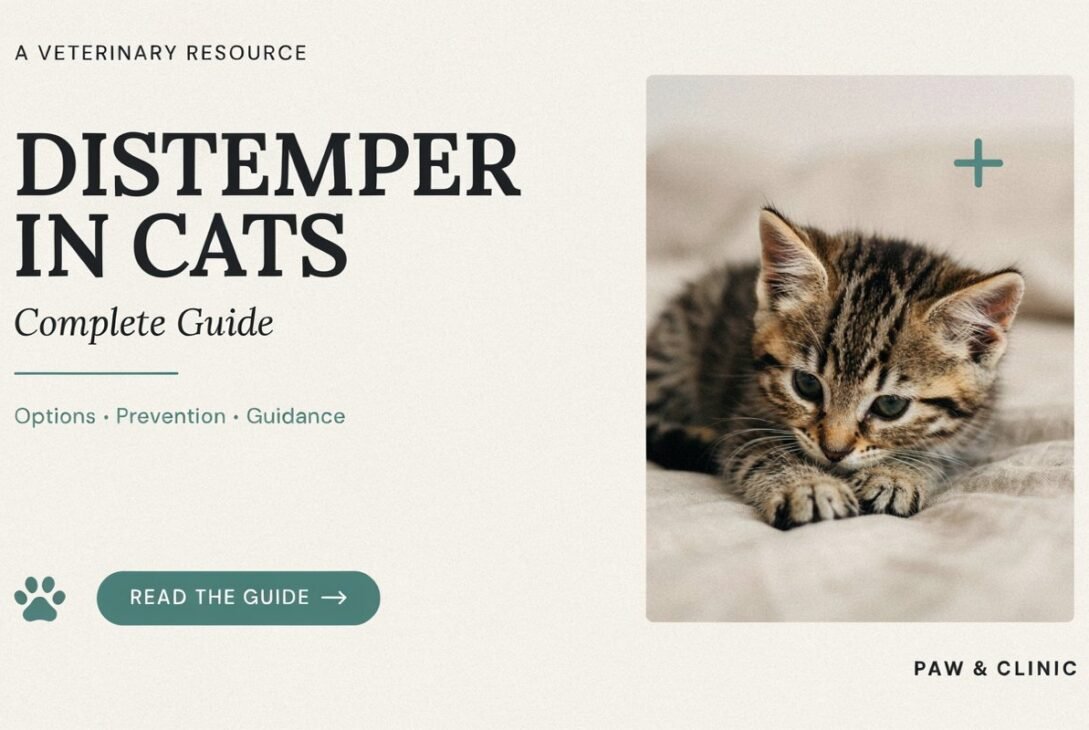
Feline distemper is not the same virus as canine distemper, despite matching a name. Feline panleukopenia , caused by feline panleukopenia virus ( FPV ) , is a frequent disease in cats . It is closely related to canine parvovirus and is often nicknamed ” distemper ” in cats .
The term “panleukopenia” accurately captures what the virus does, in that it produces a drastic reduction in white blood cells (leukocytes) across the body. White blood cells are the cat’s frontline barrier against infection. When the numbers drop. Your cat’s immune system loses its ability to fight back.
This virus is:
- Extremely contagious between cats
- Resistant to many household disinfectants
- Capable of surviving in the environment for over a year
- Most dangerous to kittens, unvaccinated cats, and immunocompromised cats
Older cats sometimes survive with supportive care, but kittens under five months old face a much higher mortality rate, often exceeding 90% without aggressive treatment.
Why Cat Owners Mistake It For Canine Distemper
Many pet owners think the two diseases are identical or that one can transfer to the other species, as both are called “distemper.” They can’t. Canine Distemper is a morbillivirus related to measles, feline panleukopenia is a parvovirus. Your dog cannot spread panleukopenia to your cat, and your cat cannot give canine distemper to your dog.
However, it’s worth taking a quick look at the signs of canine distemper, as many homes have both dogs and cats, and owners often wonder if an infection in one creature puts the other at risk.
Canine Distemper Symptoms (For Context)
Canine distemper typically produces:
- Thick nasal and eye discharge
- Coughing and labored breathing
- Fever that comes and goes
- Vomiting and diarrhea
- Seizures or muscle twitching in advanced cases
Again – this is a dog-only disease. It doesn’t transfer over to cats but understanding it helps multi-pet homes know which animal needs what type of care.”
Symptoms of Feline Distemper: What to Watch For
Feline panleukopenia symptoms often develop quickly and get worse fast. Because the virus affects quickly dividing cells — including those in the intestines, bone marrow, and in newborn kittens, the developing neurological system — the indications can appear severe within just 24 to 48 hours.
Common feline distemper symptoms include:
- Lethargy — a previously active cat suddenly seems weak or uninterested in moving
- Loss of appetite — often the first sign owners notice
- High fever followed by a sudden drop in body temperature
- Vomiting, sometimes frothy or yellow-tinged
- Severe diarrhea, occasionally bloody
- Dehydration — dry gums, sunken eyes, skin that doesn’t spring back when gently pinched
- Hiding behavior — cats with panleukopenia often seek dark, quiet spaces
- Rough, unkempt coat
In kittens infected either before or shortly after birth, the virus may damage the cerebellum and result in a disease known as cerebellar hypoplasia. Kittens that survive the condition generally have tremors, unsteady mobility and poor coordination for life. It doesn’t hurt them and many go on to live full and happy lives after you learn to work around their balance concerns.
Feline Parvovirus Symptoms vs. Panleukopenia Symptoms
Here’s one thing people get mixed up about: Feline parvovirus symptoms and feline panleukopenia symptoms are the same. I should also add that feline panleukopenia virus is a parvovirus, thus when someone is googling ” feline parvovirus symptoms ” they are actually looking for panleukopenia.
This is not canine parvovirus, a similar but different virus that affects dogs. The two viruses are close relatives and in rare instances, strains of canine parvovirus have been identified to be able to infect cats, although the great majority of feline cases are caused by the feline-specific variant.
How Cats Catch Panleukopenia
Understanding transmission helps explain why prevention matters so much. The virus spreads through:
- Direct contact with the body secretions of an afflicted cat
Dirty litter boxes, bedding and food bowls
Fleas which have eaten on an afflicted cat
Human hands, shoes or clothing following contact with diseased animal
Mother-to-kitten transmission during gestation
The longest survival of the virus outside the body means that shelters and multi-cat homes are at most danger for outbreaks. A cat does not have to have direct touch with a diseased animal; it may become infected by contact with a contaminated surface.
Distemper in Cats Diagnosis
If your vet detects panleukopenia, you can expect a combination of the following:
- Physical examination — assessing hydration status, body temperature, and any signs of abdominal tenderness or discomfort
- Complete blood count (CBC) — looking for the telltale drop in white blood cells
- Fecal ELISA testing — a rapid in-clinic test similar to canine parvo tests, since the viruses are closely related
- PCR testing — for confirmation in ambiguous cases
The earlier they are found the better chance of survival. So if your cat suddenly starts vomiting, has diarrhea and excessive lethargy it’s time for an instant vet appointment, not a wait and see attitude.
Feline distemper: Treatment
No specific antiviral treatment is available for panleukopenia. This therapy is intended to keep the cat alive until it can fight the sickness off on its own. This is called supportive care and usually includes:
- IV fluids to fight severe dehydration
anti-vomiting drug to prevent vomiting and allow re-hydration
Antibiotics to prevent secondary bacterial infections while the immune system is weakened and the body is vulnerable
nutritional supplementation occasionally by feeding tubes if cat resists food for too long
Severe cases with dangerously low white blood cells: Blood or plasma transfusion
Quarantine from other cats to prevent future infection
Hospitalization is generally required, often for many days. The first 3-4 days are usually the most critical time of the illness and cats that survive this period usually have a much better outlook.
Prevention—Your Best Defense
Vaccination is the best protection against feline panleukopenia. Another key vaccine is the FVRCP vaccine, which prevents feline viral rhinotracheitis and calicivirus. This is a vaccine that every cat should have, regardless of lifestyle.
Vaccination Schedule
- Kittens: a series of vaccines starting around 6-8 weeks, with boosters every 3-4 weeks until 16 weeks old
- Adult cats: a booster one year after the kitten series, then every 1-3 years depending on your vet’s recommendation
Other Preventive Measures
Avoid unvaccinated kittens around unusual cats or unexpected places
Disinfect litter boxes, bowls and beds using a bleach solution (the virus is resistant to many common cleaners)
Introduce new cats to your household once they’ve been quarantined
Do not take your unvaccinated pets to high risk locations such as shelters or feral colonies.
Wash hands, change clothes after contact with unknown cats.
Comparing Feline and Canine Distemper at a Glance
| Feature | Feline Distemper (Panleukopenia) | Canine Distemper |
|---|---|---|
| Virus type | Parvovirus | Morbillivirus |
| Cross-species risk | Cannot infect dogs | Cannot infect cats |
| Main symptoms | Vomiting, diarrhea, low white blood cells | Respiratory issues, neurological signs |
| Vaccine | FVRCP | DA2PP/DHPP |
| Survival rate (untreated kittens) | Very low | Very low |
Can Distemper in Cats Be Prevented Completely?
Vaccination doesn’t guarantee 100% immunity, but it dramatically lowers infection risk and severity. Most vaccinated cats that do encounter the virus experience mild symptoms rather than the life-threatening version seen in unvaccinated animals.
FAQ
Is parvo the same as distemper in cats?
Yes, in terms of function. Feline parvovirus is a parvovirus peculiar to felines, and hence feline parvovirus symptoms and panleukopenia symptoms are the same.
Can my dog get distemper from my cat?
No. Canine distemper and feline panleukopenia are two completely separate viruses and do not cross species.
How long is cat distemper contagious?
The acute illness phase is usually 5-7 days. Those cats that survive the first few days will usually recover completely in the next two to three weeks, although full immunological recovery can take longer.
Can vaccinated adult cats get Panleukopenia?
It’s rare but possible, especially if boosters have lapsed. Vaccinated cats that do become infected usually have considerably milder symptoms.
Can people catch distemper from cats?
No. Panleukopenia is only for cats and few wild cats. It’s no direct threat to humans.”
What should I do if I think my cat has distemper?
Go to your vet immediately. Don’t wait, early treatment greatly increases the likelihood of survival. In the meanwhile, keep your cat away from other pets.
Can cats that are only indoors catch distemper?
Yes. The virus is carried on hands, shoes and clothing, so even indoor cats are at danger of exposure if they’re not vaccinated.
Last thoughts
One of the most significant viral hazards a cat can face is distemper in cats, or more correctly feline panleukopenia, but it’s also one of the most avoidable. By vaccinating your cat regularly, practicing proper cleanliness and seeking veterinarian care at the earliest indication of disease, you’ll provide her the best possible defense.
Should you ever doubt that what your cat is going through is a serious issue, don’t take a chance. A same day vet visit could be the difference between a medical emergency and an ailment that can be treated.