
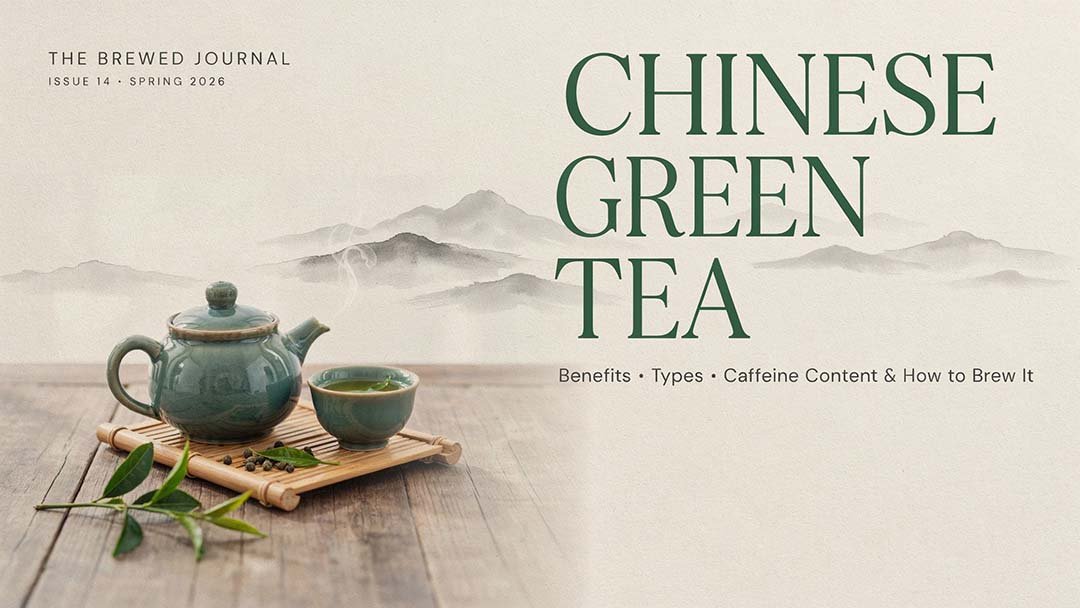
If you’ve ever stood in a tea aisle with a dozen green boxes bearing unfamiliar names – Longjing, Biluochun, Maofeng – and wondered whether one is genuinely worth your money, you are not alone. China has been cultivating and improving green tea for more than a thousand years, and it remains one of the most talked-about drinks in the wellness industry today.
However, not all green teas are the same, and not every cup will provide the benefits you have read about on the Internet. In this article we’ll go over what makes chinese green tea unique, health advantages proven by science, how much caffeine you’re really getting, which chinese green tea leaves to seek, and how to brew a cup that’s not bitter or grassy. By the conclusion of this article you’ll know exactly how to pick and drink an excellent chinese green tea the right way.
What Is Chinese Green Tea?
Chinese green tea is made from the same plant as black, white and oolong teas. That plant is the Camellia sinensis plant. It’s in the processing that the difference occurs. Once picked the leaves are cooked straight away, either pan-fried in a wok or steamed, to prevent oxidation. In this method the fresh green flavor is locked in and more of the natural antioxidants are left intact than in fermented teas.
China has hundreds of green teas, each related to a distinct locale, climate and harvesting culture. This is distinct than Japanese green tea which is virtually always steamed and tends to taste more vegetal, whereas pan-fired Chinese green tea generally has a nuttier,
Green Tea From China Vs Other Green Teas
A typical question people ask is how china green tea stacks up against Japanese sencha or matcha. The difference, essentially, is all in the processing. Japanese teas steamed are bright green in color and have a more umami flavor. Chinese teas are generally pan-fired, lighter in color, toastier in smell and smoother in finish. Neither is “better” — it’s all about personal preference.
Common Types of Chinese Green Tea Leaf
Not sure where to begin? Some of the most regarded Chinese green tea leaves, each with its distinct character.
Longjing (Dragon Well)
Longjing, from the area around Hangzhou, is flat, pan-fired, and tastes sweet like chestnuts. It is often said to be the benchmark for a fine Chinese green tea
Biluochun (Green Snail Spring)
Jiangsu Province tightly wrapped leaves with a flowery and delicious smell. It is picked very early in spring, making it delicate and soft in flavor.
Huang Shan Mao Feng
Yellow Mountain tea has a delicate flowery, orchid-like smell and a clean finish. It was called after Yellow Mountains. It is a favorite of tea lovers who want something mellow and pleasant.
Xinyang Maojian tea
This type, from Henan province, has a naturally sweet taste and a crisp, fresh aftertaste – suitable for beginners.
Gunpowder Tea
Gunpowder tea is named for its tightly rolled, pellet-like leaves and has a stronger, smokier flavor that stands up to intense brewing.
Chinese Teas and Benefits What Science Says?
When people speak about advantages of chinese teas, they are generally referring to the high concentration of catechins in the tea, which is a group of natural antioxidants that make up a big share of the health reputation of green tea. Research so far indicates the following.
High in Antioxidants
Green tea is one of the most potent natural sources of Egcg catechins (epigallocatechin gallate). Antioxidants aid the body in combating oxidative stress, which is connected with cell aging and other chronic diseases.
May support heart health
Regular green tea drinkers had slight but significant improvements in cholesterol levels and blood vessel function, studies reveal. This is not a substitute for medical therapy but may be used as a part of a heart healthy diet.
May Support Metabolism
Green tea has a mix of caffeine and catechins that may slightly improve the number of calories you burn. It is likely the reason why so many “green tea for weight loss” products contain the extract of chinese green tea as a main ingredient.
Promotes mental alertness
It is frequently believed that green tea’s calm-but-alert impact (compared to the jitteriness that coffee can induce) comes from its modest caffeine concentration, in combination with an amino acid called L-theanine.
Good for Healthy Skin
That’s why Chinese green tea extract is also included in skin care formulations, since it’s the same antioxidants that help preserve your cells from the inside but also work to help lessen obvious indications of skin stress when taken frequently or applied topically.
Caffeine Levels in Chinese Green Teas
One of the most popular questions about this drink is also one of the simplest: how much caffeine does it contain? An 8-ounce cup of Chinese green tea averages from 25-45 mg of caffeine depending on the type of leaf, temperature of water and how long it is steeped. For reference, that’s roughly half to a third the caffeine in a standard cup of coffee (95-200 mg).
Teas made from younger, more delicate leaves, such as biluochun, tend to have a little less caffeine, but stronger teas, like gunpowder tea, can have more. If you are sensitive to caffeine, a shorter steeping time or cooler water will extract less.
How to Brew Chinese Green Tea the Right Way
A bitter, grassy cup is almost always a brewing mistake — not a bad tea. Here’s how to get it right.
- Use water that’s not boiling. Aim for 160–180°F (70–80°C). Boiling water scorches the delicate leaves and pulls out excessive bitterness.
- Use the right amount of leaves. A general rule is 1 teaspoon of loose leaf per cup, adjusted to taste.
- Steep briefly. Most chinese green tea leaves only need 1–3 minutes. Longer isn’t better here.
- Re-steep if possible. Good quality leaves can often be steeped two or three times, with each round revealing a slightly different flavor.
- Store leaves properly. Keep them in an airtight container, away from light, heat, and moisture, to preserve freshness.
Choosing Good Chinese Green Tea Brands
With so many chinese tea brands on the market, quality can vary widely. A few things to look for:
- Origin transparency — reputable brands state the specific growing region (e.g., West Lake for Longjing).
- Harvest date — fresher is generally better; look for the most recent spring harvest.
- Whole leaf vs. broken leaf — whole, intact leaves usually indicate higher grade tea.
- Third-party testing — some brands test for pesticide residue and heavy metals, which is worth checking if you drink tea daily.
Well-known chinese tea brands often specialize in a specific region or tea family, so it’s common for tea drinkers to buy directly from specialty importers rather than general supermarket blends for the best quality.
Side effects to look out for
Chinese green tea is likely safe for most healthy adults when used in modest doses (around 2–3 cups a day). That said, here are some things to know:
If you drink it late in the day, the caffeine can interfere with sleep.
Some people may become a little nauseous drinking it on an empty stomach.
It includes tannins that can somewhat limit the absorption of iron from plant-based foods when eaten with meals.
Pregnant and caffeine-sensitive people should talk to a doctor for safe ingestion amounts.
Frequently Asked Questions (FAQs)
Is it okay to consume chinese green tea every day?
Yes, 2-3 cups a day is a fair and acceptable intake for most healthy persons, and provides antioxidants without too much caffeine.
What is the healthiest green chinese tea?
No one kind is “healthier” – Longjing, Biluochun and Huangshan Maofeng all have similar antioxidant profiles. The choice between the two depends generally on flavor preference and leaf quality.
Does green tea help you lose weight?
It might give you a tiny metabolic boost from the caffeine and catechins, but it’s better as part of a balanced overall diet, not as a stand-alone solution.
What’s the distinction between chinese green tea and matcha?
Matcha is a stone-ground, powdered Japanese green tea whisked into water, providing a more powerful dose of nutrients per cup. Chinese green tea is almost always loose leaf, steeped for a lighter and more delicate experience.
Is it okay to drink green tea at nite?
It does include a moderate amount of caffeine, which may disrupt sleep in some people, so it’s generally a good idea to avoid it a few hours before you go to sleep.
Conclusion
Chinese green tea has earned its reputation the old-fashioned way, via centuries of tradition and a growing body of science that supports its antioxidant and metabolic benefits. Longjing’s sweet chestnut notes and Biluochun’s floral lift means there is a variety for nearly every palate.
Take it simple. Pick one well-rated type from a respectable brand, brew it a little cooler and shorter than you think you should and build the habit from there. That one cup you drink each day might be the simplest wellness change you make this year.